Vintage 1940s Rosalie Cranberry Bowl by American Limoges & Designed by Viktor Schreckengost
IT'S FUNCTION. THAT'S WHAT I WAS ALWAYS ATTRACTED TO... VIKTOR SCHRECKENGOST, 2006
{HISTORY}
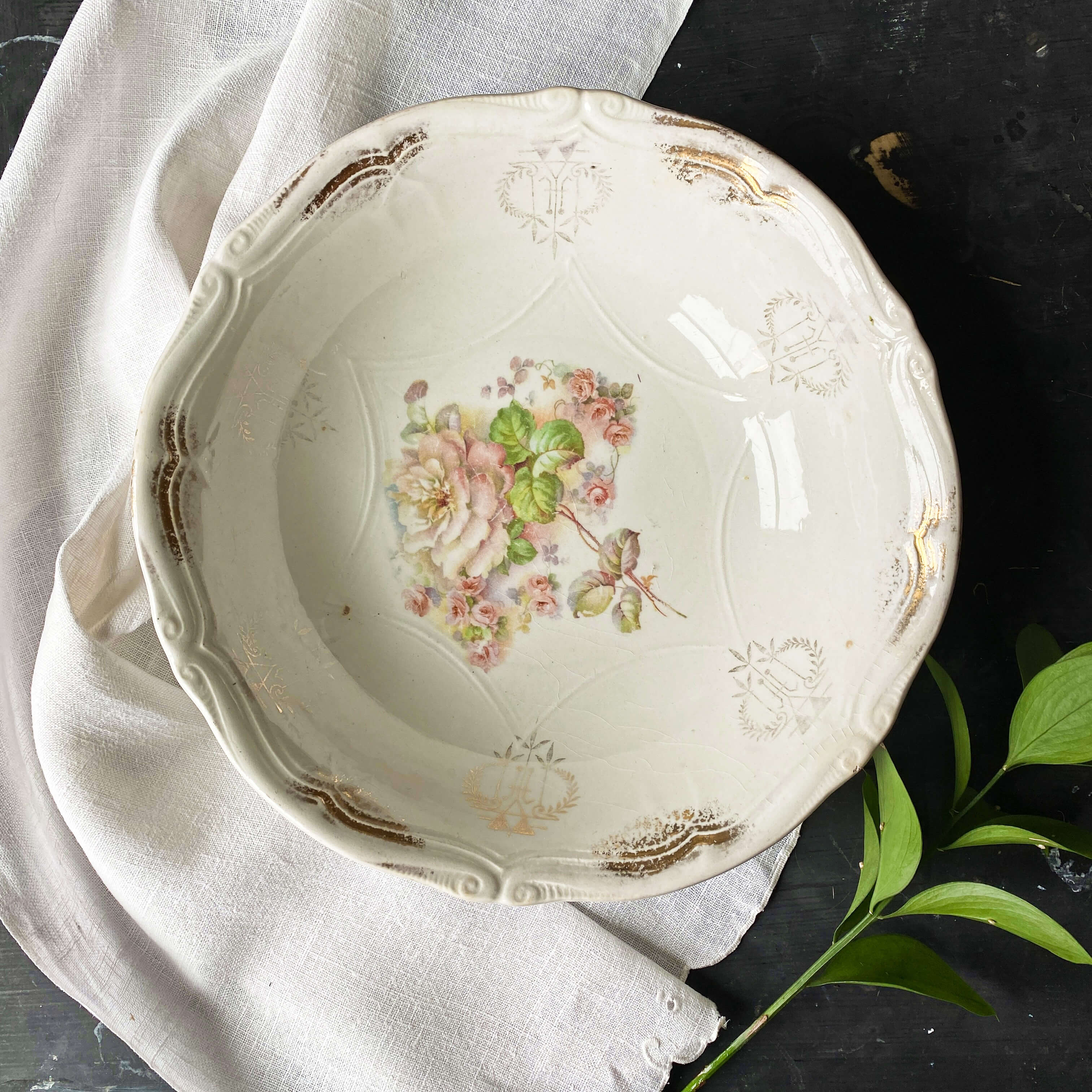
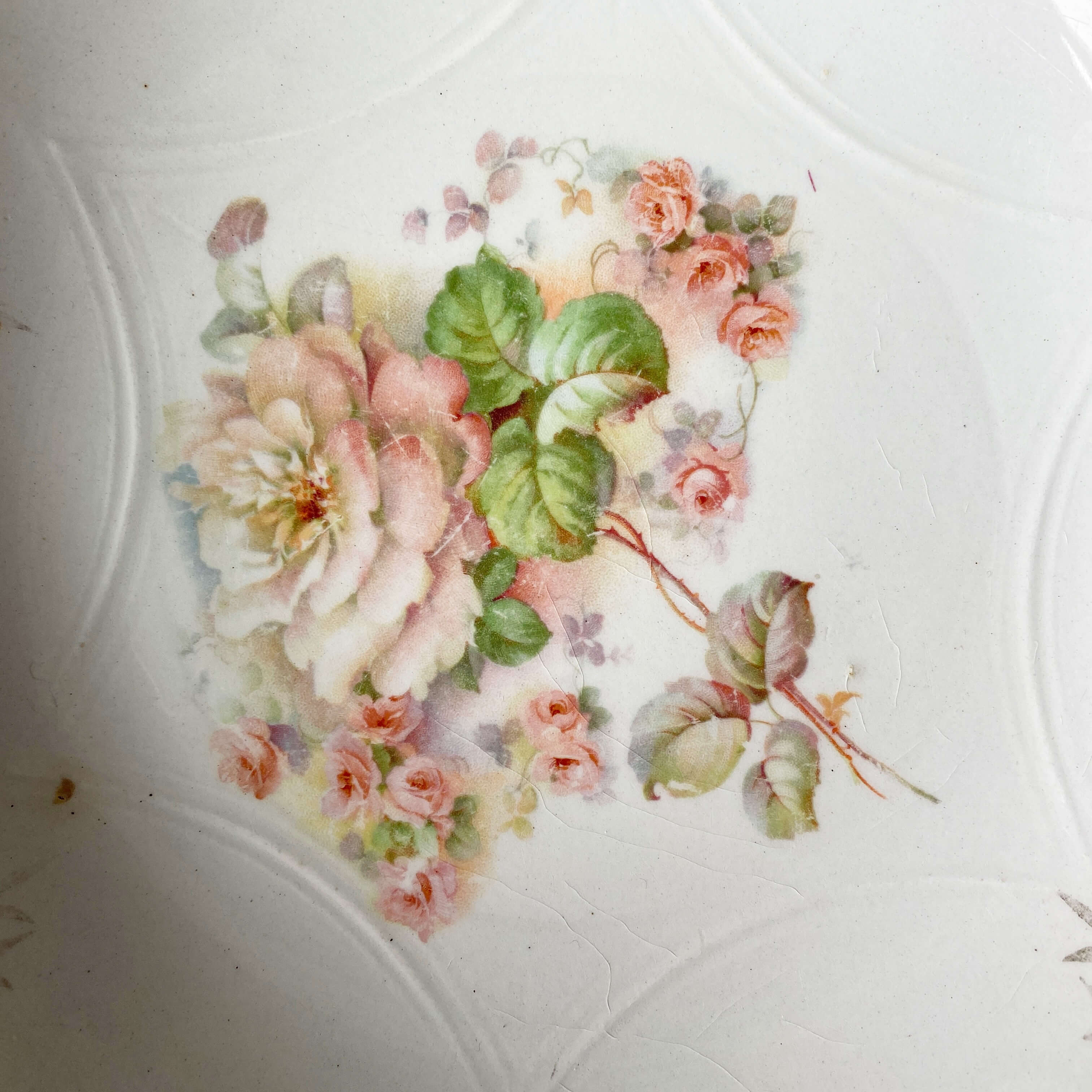
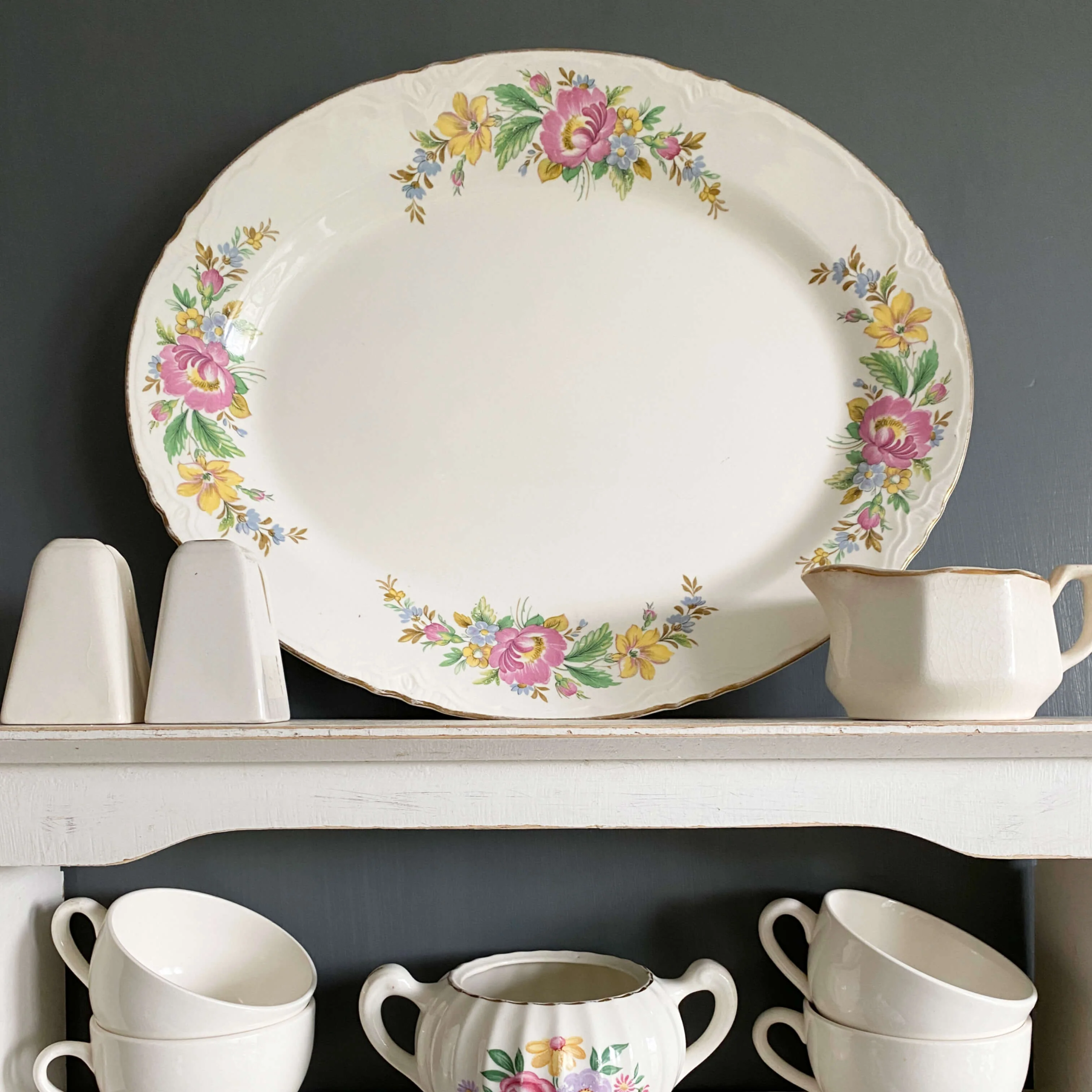
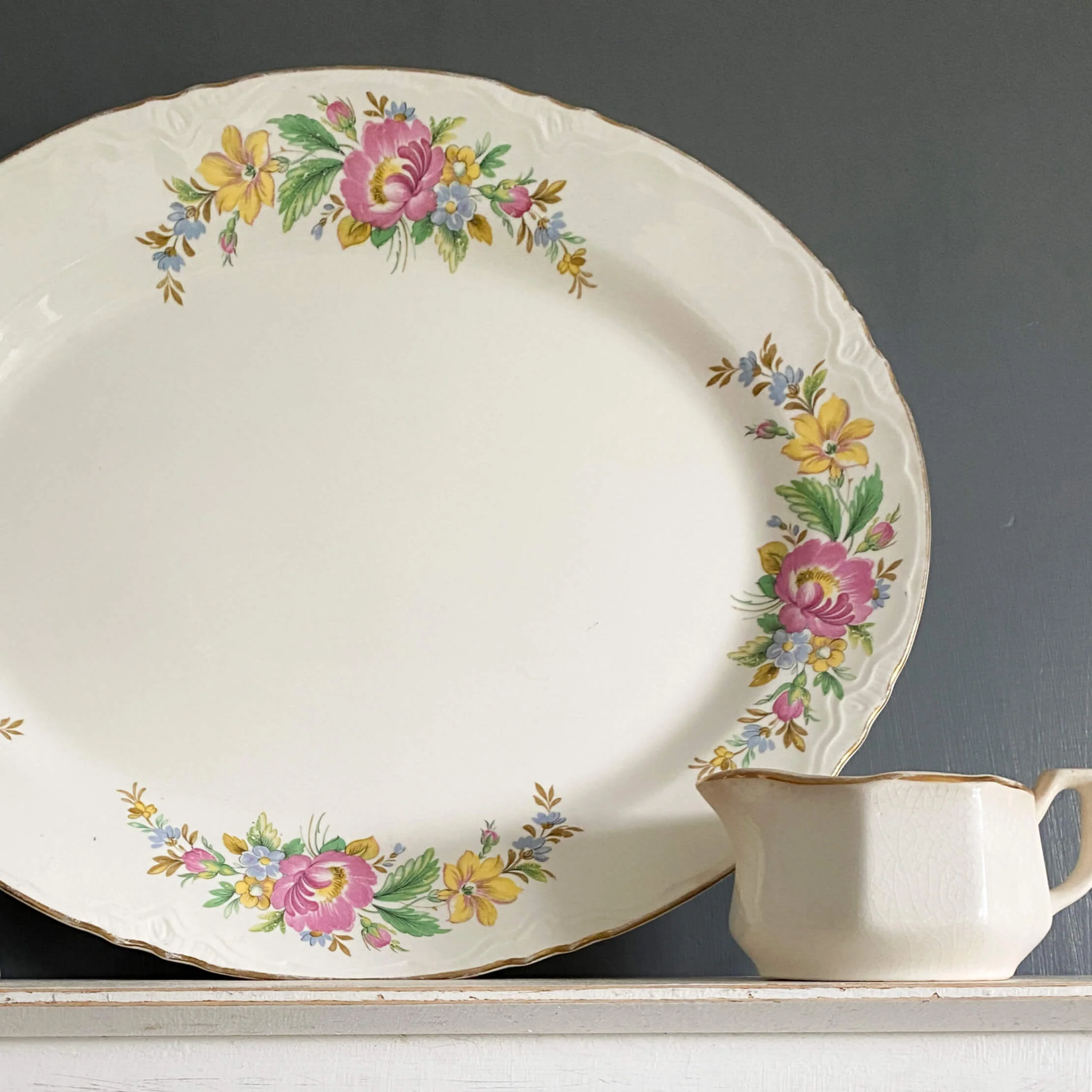
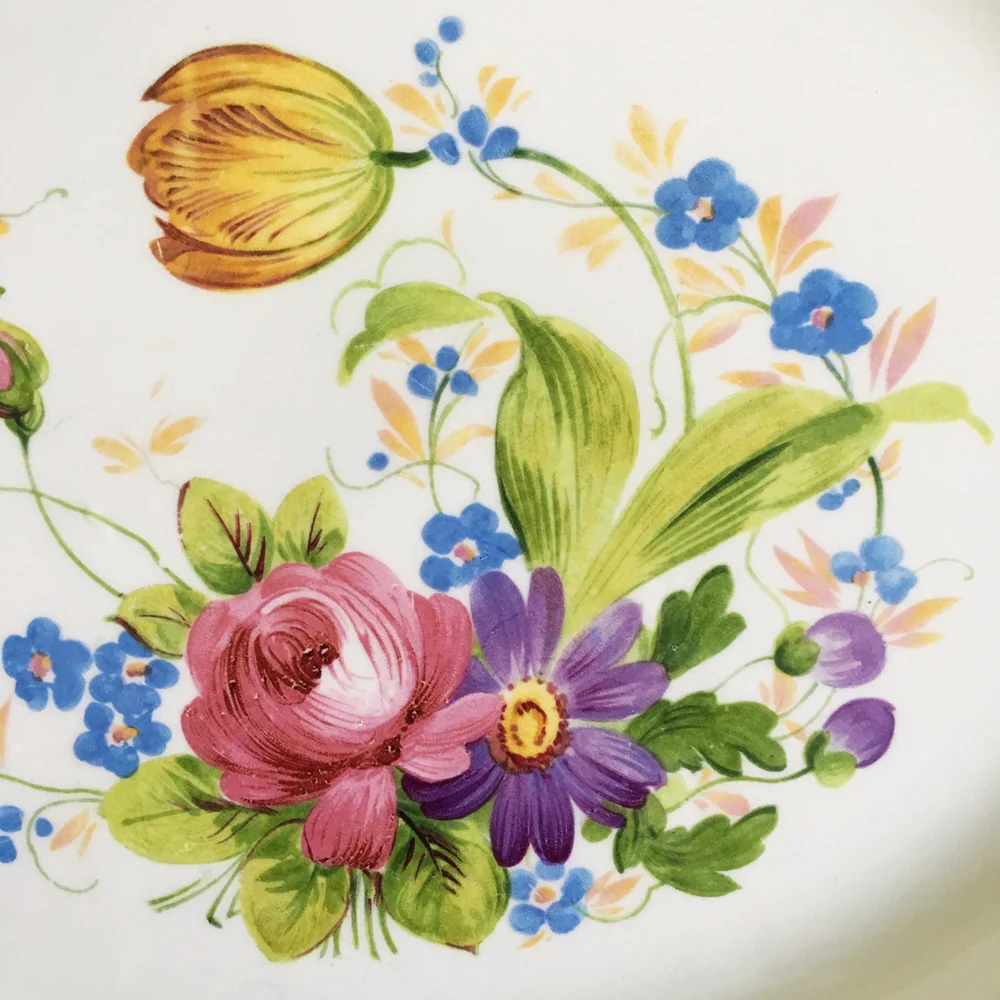
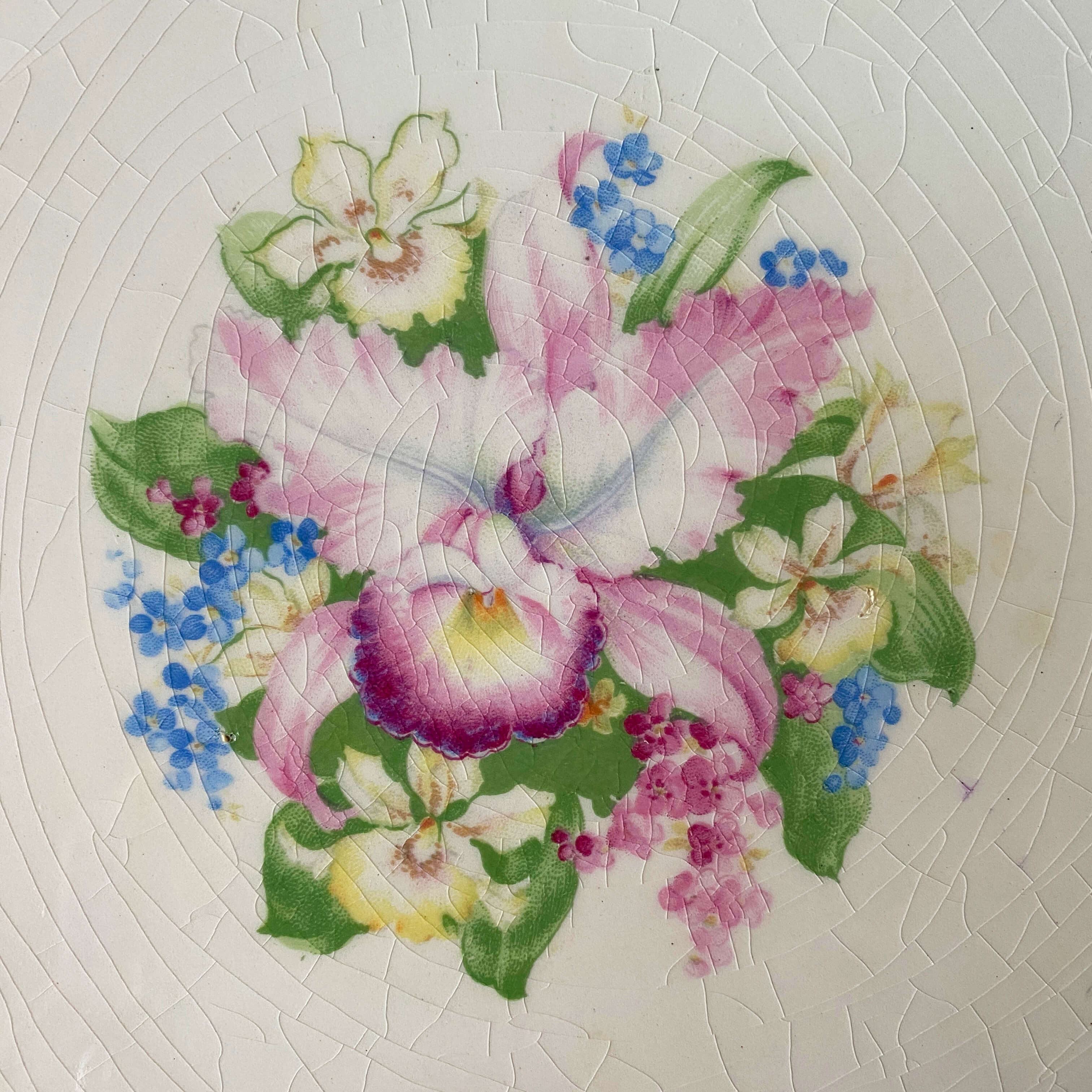
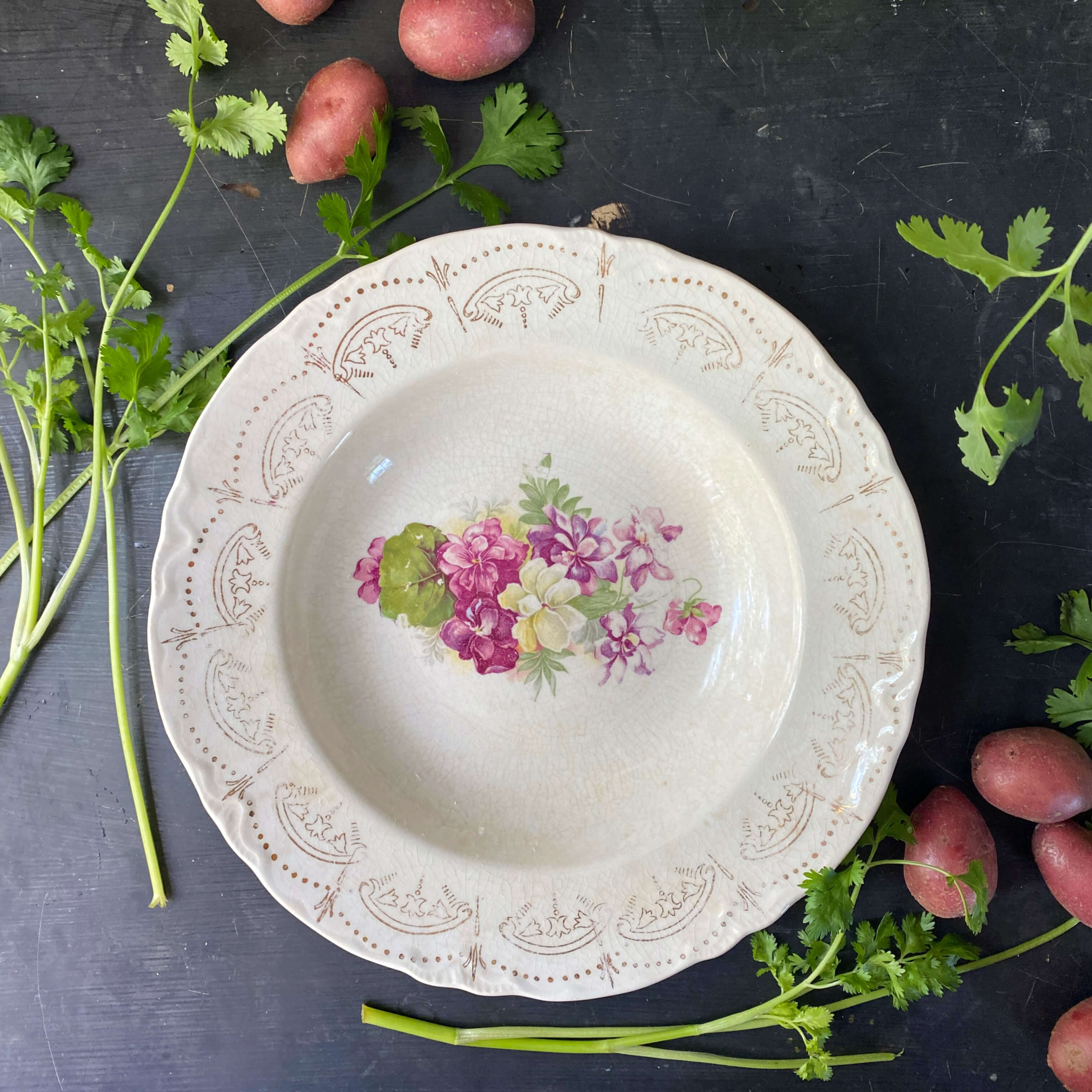
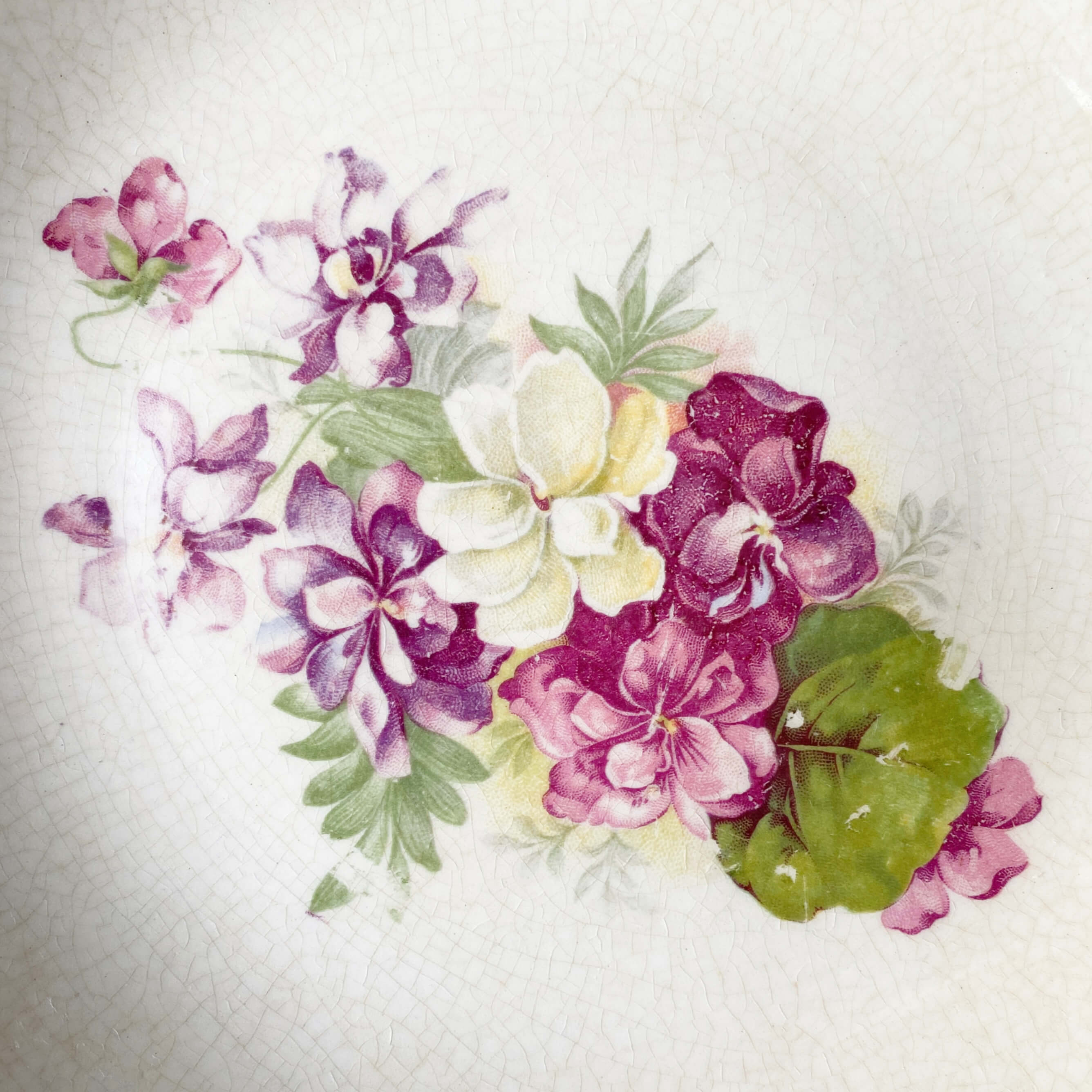
Meet Rosalie. She was just one of many pretty dish patterns designed by 20th-century industrial artist, Viktor Schreckengost (1906-2008) for American Limoges. Made in Sebring, Ohio in the 1940s, the Rosalie pattern contains gold filigree, a tightly ribbed shoulder, and a big bouquet of colorful flowers. Designed in the Triumph shape, which Victor debuted in 1937, Rosalie is an interesting combination both in a tactile and visual way.
Viktor began designing dinnerware for American Limoges in the 1930s. His style combined traditional themes with artistic shapes, textures, and more modern designs. Visually dynamic accessories in interesting shapes accompanied traditional dishware including a round, dome-shaped sugar bowl with a chunky pedestal base and a chimney-style knob handle on the lid. Viktor's dinnerware designs were just one example of the unique way he looked at the world, which in turn influenced other artists across many fields including toys, transportation, kitchenware and fine art. So influential was Viktor in the design world, that he was awarded the National Medal of Arts in 2006.
As for American Limoges, it was inspired by the delicate porcelain of Limoges, France. Based in the U.S., American Limoges was founded in 1900 in Sebring, Ohio, and was originally known as the Limoges China Company. They specialized in thin-walled china for the American market with a belief that American porcelain-style dishware could be just as attractive as the French equivalent.
But when a fire broke out and destroyed everything the pottery had built, including formulas and designs, they changed gears and started making more durable earthenware dishes with similar delicate designs often found in porcelain patterns. Determined to prove that American earthenware was just as superior as esteemed English earthenware, the pottery successfully created beautiful and durable dishware equal to that of British design.
Bustling by the 1930s. American Limoges created not only artistic designs full of elegant patterns and beautiful color palettes, they were also at the forefront of innovation when it came to manufacturing processes within the pottery plant.
After the French Limoges pottery in France caught wind of the great success, the designs, and the similar name, The Limoges China Company (of America) had to change names in order to avoid a lawsuit. Again, just like after the fire, the company pivoted with a name change and became the American Limoges Company, which was a change sufficient enough to calm everyone down in the industry on both sides of the ocean. By the 1950s, unfortunately, this evolution was not as successful as the last. The American Limoges Company went bankrupt and closed its doors.
In the decade before the company folded, this cranberry bowl was made. Available in large quantities for service up to 12 with all sorts of matching companion pieces, the Rosalie pattern was offered for sale piece by piece, so that shoppers could amass a collection to fit their needs and their dreams. While researching this pattern, we found an ad dating to 1947, that features three Rosalie dinner plates as the starting point to building a custom set.
Cranberry berry bowls were made for the purpose of serving cranberry relish and other sauces, but they are also great for any other purpose that requires a small cereal-shaped bowl. Bigger than a berry bowl, but smaller than a small mixing bowl, here In The Vintage Kitchen, we especially love them for whipping up eggs, for food prep purposes, and for serving fresh fruit, or party dips. It also looks lovely with other mix and match gold filigree floral patterned craberry or relish dishes like this one here.
Given this dish's cute size and interesting shape, it's so fun to imagine that 80 years ago, a shopper fell in love with this one lone cranberry bowl at first sight and was inspired to collect an entire set of Rosalie dishware.
PHOTOS OF VIKTOR AND HIS WORK COURTESY OF THE ARCHIVES OF AMERICAN ART. VINTAGE ADVERTISEMENT COURTESY OF THE HARTFORD COURANT, APRIL 23, 1947.
{SPECIAL FEATURES}
- Cranberry bowl
- Rosalie pattern, Triumph shape
- Colors include gold, pink, amethyst, plum, yellow mustard, evergreen, pale blue, raspberry, and sage
- Unmarked on bottom
{CONDITION}
In beautiful vintage condition, this bowl contains no chips or cracks, with the exception of one age-old scuff mark at the rim. There are two very light stain spots on the inside wall. Both the filigree and the floral bouquet are bright, crisp and clear with no rub marks. Please see photos.
{SIZE}
This bowl measures just under 5" inches (diameter) x 3" inches (height) and weighs 13 oz.
{FOR THE COLLECTOR}
Find more American Limoges pieces in the Rosalie pattern here.
Product Information
Product Information
Shipping & Returns
Shipping & Returns
Description
IT'S FUNCTION. THAT'S WHAT I WAS ALWAYS ATTRACTED TO... VIKTOR SCHRECKENGOST, 2006
{HISTORY}
Meet Rosalie. She was just one of many pretty dish patterns designed by 20th-century industrial artist, Viktor Schreckengost (1906-2008) for American Limoges. Made in Sebring, Ohio in the 1940s, the Rosalie pattern contains gold filigree, a tightly ribbed shoulder, and a big bouquet of colorful flowers. Designed in the Triumph shape, which Victor debuted in 1937, Rosalie is an interesting combination both in a tactile and visual way.
Viktor began designing dinnerware for American Limoges in the 1930s. His style combined traditional themes with artistic shapes, textures, and more modern designs. Visually dynamic accessories in interesting shapes accompanied traditional dishware including a round, dome-shaped sugar bowl with a chunky pedestal base and a chimney-style knob handle on the lid. Viktor's dinnerware designs were just one example of the unique way he looked at the world, which in turn influenced other artists across many fields including toys, transportation, kitchenware and fine art. So influential was Viktor in the design world, that he was awarded the National Medal of Arts in 2006.
As for American Limoges, it was inspired by the delicate porcelain of Limoges, France. Based in the U.S., American Limoges was founded in 1900 in Sebring, Ohio, and was originally known as the Limoges China Company. They specialized in thin-walled china for the American market with a belief that American porcelain-style dishware could be just as attractive as the French equivalent.
But when a fire broke out and destroyed everything the pottery had built, including formulas and designs, they changed gears and started making more durable earthenware dishes with similar delicate designs often found in porcelain patterns. Determined to prove that American earthenware was just as superior as esteemed English earthenware, the pottery successfully created beautiful and durable dishware equal to that of British design.
Bustling by the 1930s. American Limoges created not only artistic designs full of elegant patterns and beautiful color palettes, they were also at the forefront of innovation when it came to manufacturing processes within the pottery plant.
After the French Limoges pottery in France caught wind of the great success, the designs, and the similar name, The Limoges China Company (of America) had to change names in order to avoid a lawsuit. Again, just like after the fire, the company pivoted with a name change and became the American Limoges Company, which was a change sufficient enough to calm everyone down in the industry on both sides of the ocean. By the 1950s, unfortunately, this evolution was not as successful as the last. The American Limoges Company went bankrupt and closed its doors.
In the decade before the company folded, this cranberry bowl was made. Available in large quantities for service up to 12 with all sorts of matching companion pieces, the Rosalie pattern was offered for sale piece by piece, so that shoppers could amass a collection to fit their needs and their dreams. While researching this pattern, we found an ad dating to 1947, that features three Rosalie dinner plates as the starting point to building a custom set.
Cranberry berry bowls were made for the purpose of serving cranberry relish and other sauces, but they are also great for any other purpose that requires a small cereal-shaped bowl. Bigger than a berry bowl, but smaller than a small mixing bowl, here In The Vintage Kitchen, we especially love them for whipping up eggs, for food prep purposes, and for serving fresh fruit, or party dips. It also looks lovely with other mix and match gold filigree floral patterned craberry or relish dishes like this one here.
Given this dish's cute size and interesting shape, it's so fun to imagine that 80 years ago, a shopper fell in love with this one lone cranberry bowl at first sight and was inspired to collect an entire set of Rosalie dishware.
PHOTOS OF VIKTOR AND HIS WORK COURTESY OF THE ARCHIVES OF AMERICAN ART. VINTAGE ADVERTISEMENT COURTESY OF THE HARTFORD COURANT, APRIL 23, 1947.
{SPECIAL FEATURES}
- Cranberry bowl
- Rosalie pattern, Triumph shape
- Colors include gold, pink, amethyst, plum, yellow mustard, evergreen, pale blue, raspberry, and sage
- Unmarked on bottom
{CONDITION}
In beautiful vintage condition, this bowl contains no chips or cracks, with the exception of one age-old scuff mark at the rim. There are two very light stain spots on the inside wall. Both the filigree and the floral bouquet are bright, crisp and clear with no rub marks. Please see photos.
{SIZE}
This bowl measures just under 5" inches (diameter) x 3" inches (height) and weighs 13 oz.
{FOR THE COLLECTOR}
Find more American Limoges pieces in the Rosalie pattern here.