Vintage 1940s Audubon Bird Guide Featuring Eastern & Central North America Land Birds by Richard Pough circa 1946
The study of birds is much more interesting if you know certain general facts.... Richard Pough, 1946
{HISTORY}
Nothing signals the start of spring like the sound of birds singing. And nothing's more fun than deciphering which serenade belongs to which songbird than by consulting, not your phone or your computer, but a hand-held vintage pocket-sized identification field guide that you can tote along on your walk through nature.
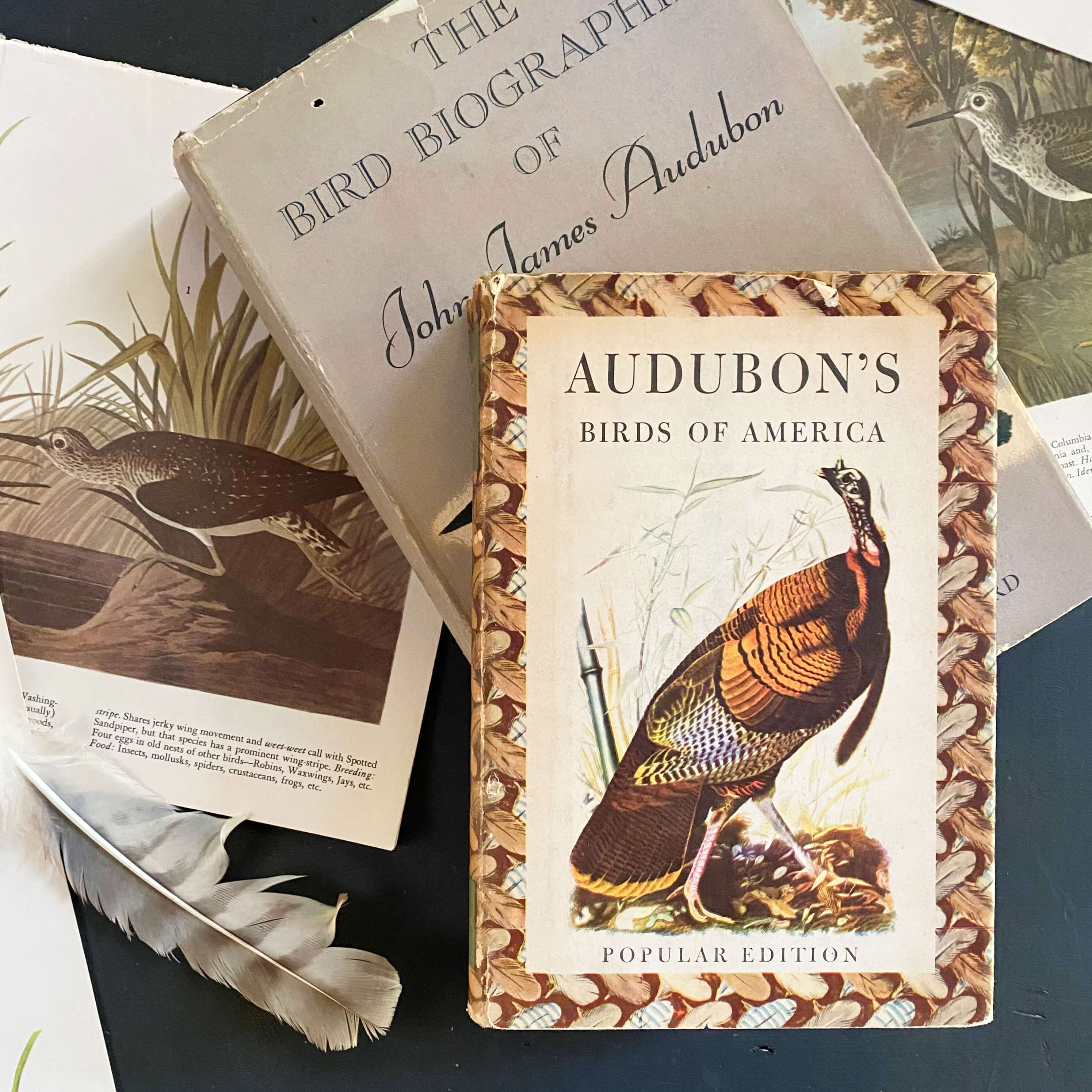
Get ready to get lost in the wild with this 1946 Audubon Bird Guide by Richard Pough (1904-2003). One of the most influential preservationists of the 20th century and a constant ally for the protection of birds and their habitats throughout his life, Richard was passionate about ecology, urbanization, and chemical run-off and its effects on wildlife habitats and bird and populations.
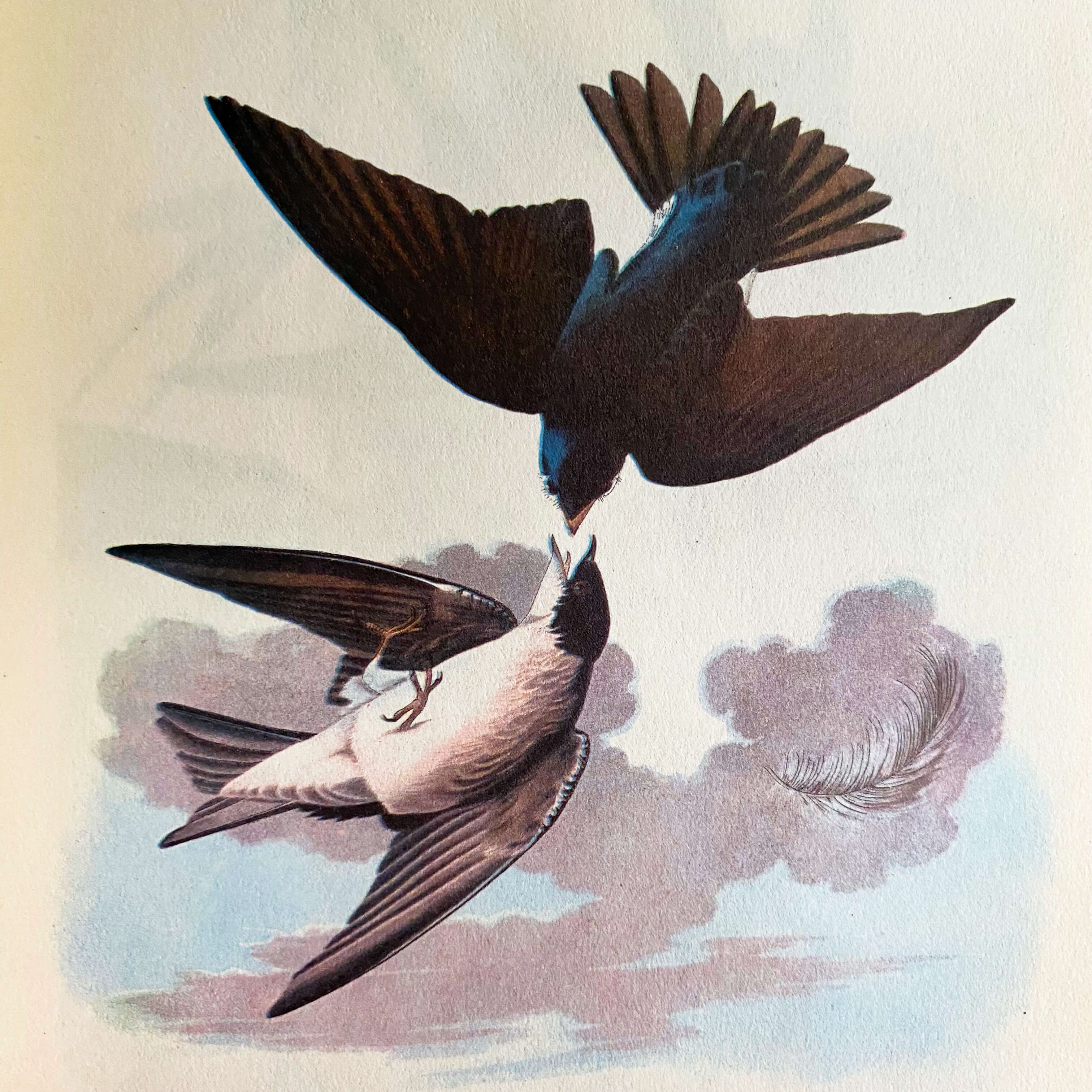
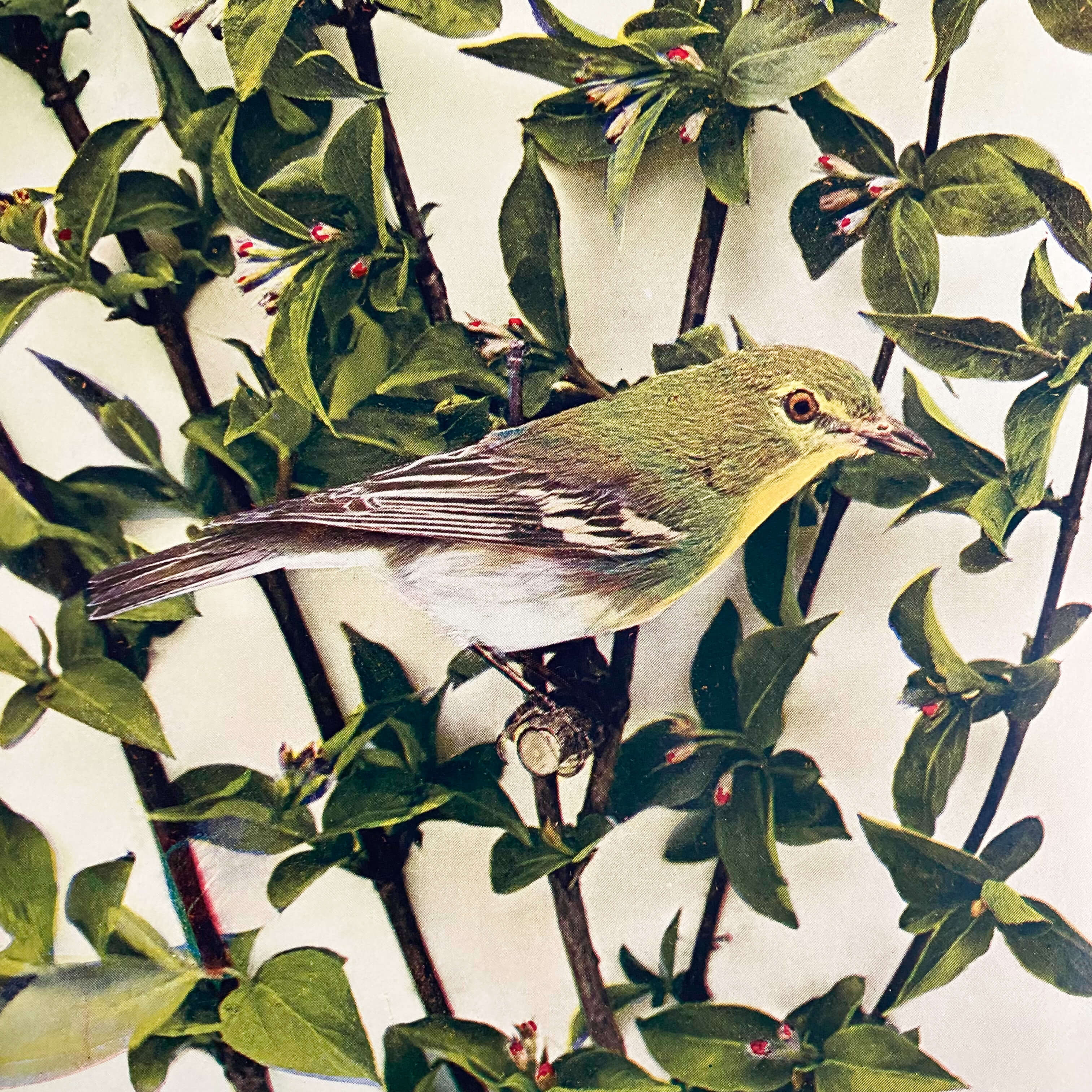
Prized for its in-depth descriptions of bird habits and habitats and its full-color illustrations by artist Don Eckelberry, this 1946 field guide was held in the highest regard for studying the avian world in its natural landscape. Featuring 275 different species of North American land birds ranging from the Rocky Mountains eastward, like all field guides it contains information on each bird's physical characteristics, habits, voice, nest site, and geographical range. But while some field guides simply state the basic facts, Richard engages readers with wonderful descriptions that capture the imagination and reveal each bird's unique character. For example...
- When describing the habits of the Red-Bellied Woodpecker, Richard writes... "because of its racket one is seldom in doubt as to its presence."
- Of the Carolina Wren... "The best way to see this or any other wren is to sit still and squeak on the back of one's hand. Before long, the wren bopping up and down, waving its tail, and scolding comes to see what is going on.
- Of the Hermit Thrush…" the song is composed of a series of ethereal bell-like cadences of great beauty."
- Of the Great Horned Owl... "One should be cautious in visiting an occupied nest. The birds do not hesitate to strike an intruder on the head or back, and the flight is so silent that one seldom has warning of the owl's approach."
- Of the Chimney Swift... "it seldom perches outside its nesting or roosting chimney but flies and sails alternately, moving in circles even when migrating.”
A bestseller upon debut, Audubon Bird Guide: Land Birds of Eastern and Central North America raised generations of future birdwatching enthusiasts and helped attract attention to the importance of wildlife conservation. Richard would go on to write two other field guides, one on water birds and the other on land birds of Western North America. In 1950, he founded the Nature Conservancy while working at the American Museum of Natural History and continued to promote its causes throughout the rest of his life. Thanks to Richard's contributions, protected preservation lands have been secured in Florida, Georgia, Arizona, and Connecticut, and he's helped millions of bird lovers advocate for protected areas around the globe.
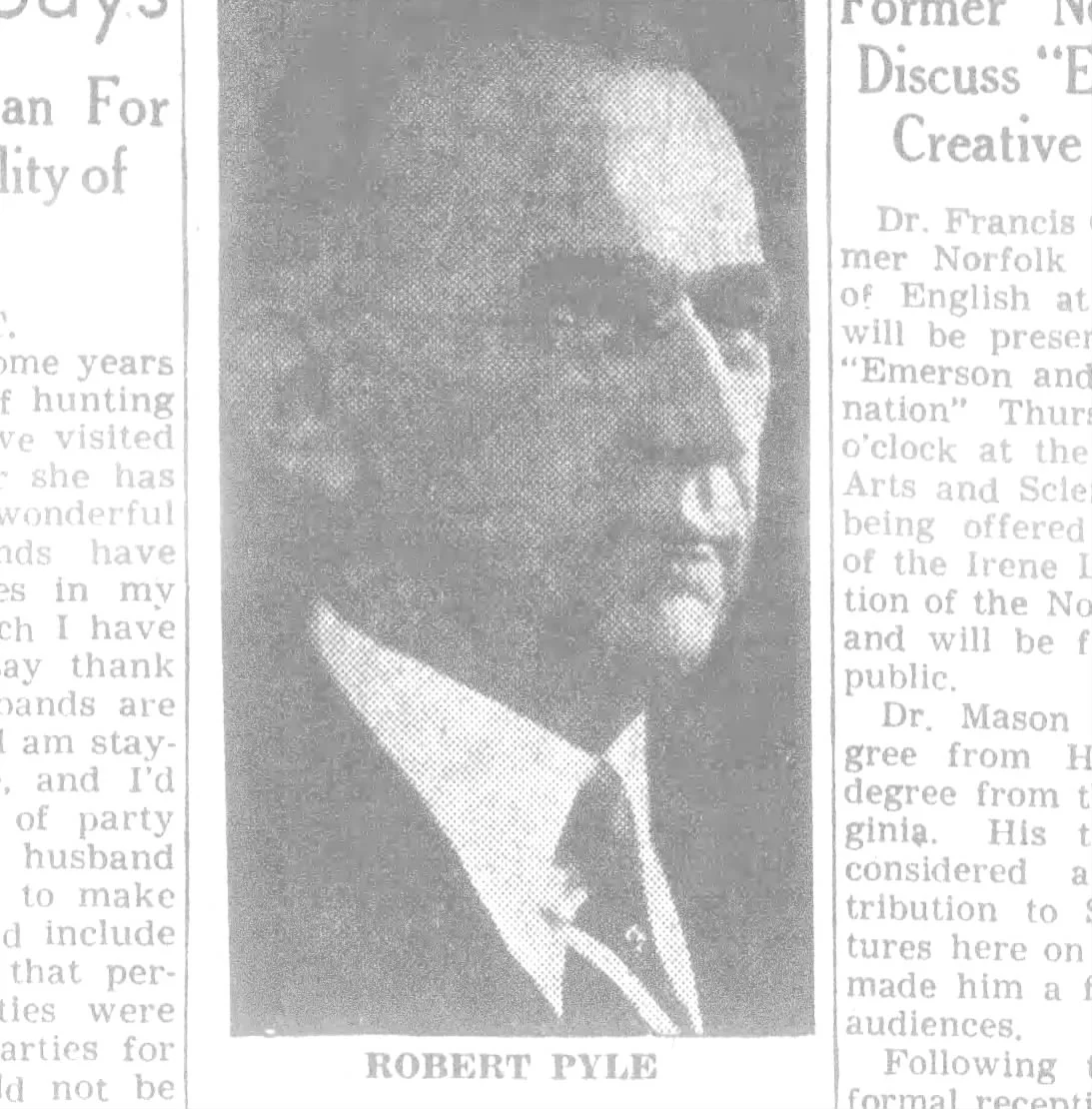
Photo of Don Eckelberry and his wife, Ginnie courtesy of Bryony Angell. Photo of Richard Pough courtesy of LIFE magazine.
{SPECIAL FEATURES}
- Published in 1946
- 312 pages
- Includes 275 species
- Contains color plates by celebrated American bird illustrator Don Eckleberry (1921-2001)
{CONDITION}
In lovely vintage condition, this field guide is clean and bright throughout. There is some light foxing on the front and back endpapers as well as a few of the color plates, and the interior flaps of the dust jacket. The dust jacket is in shabby condition with wrinkles and chippy areas, but has been completely reinforced with archival paper to preserve the overall integrity. A previous owner's name has been crossed out in marker on the front inside endpaper. The spine is tight, and all pages are intact.
{SIZE}
Measures 7.5" inches (length) x 4.75" inches (width) x 1" inch (thickness) and weighs 1 lb.
Product Information
Product Information
Shipping & Returns
Shipping & Returns
Description
The study of birds is much more interesting if you know certain general facts.... Richard Pough, 1946
{HISTORY}
Nothing signals the start of spring like the sound of birds singing. And nothing's more fun than deciphering which serenade belongs to which songbird than by consulting, not your phone or your computer, but a hand-held vintage pocket-sized identification field guide that you can tote along on your walk through nature.
Get ready to get lost in the wild with this 1946 Audubon Bird Guide by Richard Pough (1904-2003). One of the most influential preservationists of the 20th century and a constant ally for the protection of birds and their habitats throughout his life, Richard was passionate about ecology, urbanization, and chemical run-off and its effects on wildlife habitats and bird and populations.
Prized for its in-depth descriptions of bird habits and habitats and its full-color illustrations by artist Don Eckelberry, this 1946 field guide was held in the highest regard for studying the avian world in its natural landscape. Featuring 275 different species of North American land birds ranging from the Rocky Mountains eastward, like all field guides it contains information on each bird's physical characteristics, habits, voice, nest site, and geographical range. But while some field guides simply state the basic facts, Richard engages readers with wonderful descriptions that capture the imagination and reveal each bird's unique character. For example...
- When describing the habits of the Red-Bellied Woodpecker, Richard writes... "because of its racket one is seldom in doubt as to its presence."
- Of the Carolina Wren... "The best way to see this or any other wren is to sit still and squeak on the back of one's hand. Before long, the wren bopping up and down, waving its tail, and scolding comes to see what is going on.
- Of the Hermit Thrush…" the song is composed of a series of ethereal bell-like cadences of great beauty."
- Of the Great Horned Owl... "One should be cautious in visiting an occupied nest. The birds do not hesitate to strike an intruder on the head or back, and the flight is so silent that one seldom has warning of the owl's approach."
- Of the Chimney Swift... "it seldom perches outside its nesting or roosting chimney but flies and sails alternately, moving in circles even when migrating.”
A bestseller upon debut, Audubon Bird Guide: Land Birds of Eastern and Central North America raised generations of future birdwatching enthusiasts and helped attract attention to the importance of wildlife conservation. Richard would go on to write two other field guides, one on water birds and the other on land birds of Western North America. In 1950, he founded the Nature Conservancy while working at the American Museum of Natural History and continued to promote its causes throughout the rest of his life. Thanks to Richard's contributions, protected preservation lands have been secured in Florida, Georgia, Arizona, and Connecticut, and he's helped millions of bird lovers advocate for protected areas around the globe.
Photo of Don Eckelberry and his wife, Ginnie courtesy of Bryony Angell. Photo of Richard Pough courtesy of LIFE magazine.
{SPECIAL FEATURES}
- Published in 1946
- 312 pages
- Includes 275 species
- Contains color plates by celebrated American bird illustrator Don Eckleberry (1921-2001)
{CONDITION}
In lovely vintage condition, this field guide is clean and bright throughout. There is some light foxing on the front and back endpapers as well as a few of the color plates, and the interior flaps of the dust jacket. The dust jacket is in shabby condition with wrinkles and chippy areas, but has been completely reinforced with archival paper to preserve the overall integrity. A previous owner's name has been crossed out in marker on the front inside endpaper. The spine is tight, and all pages are intact.
{SIZE}
Measures 7.5" inches (length) x 4.75" inches (width) x 1" inch (thickness) and weighs 1 lb.