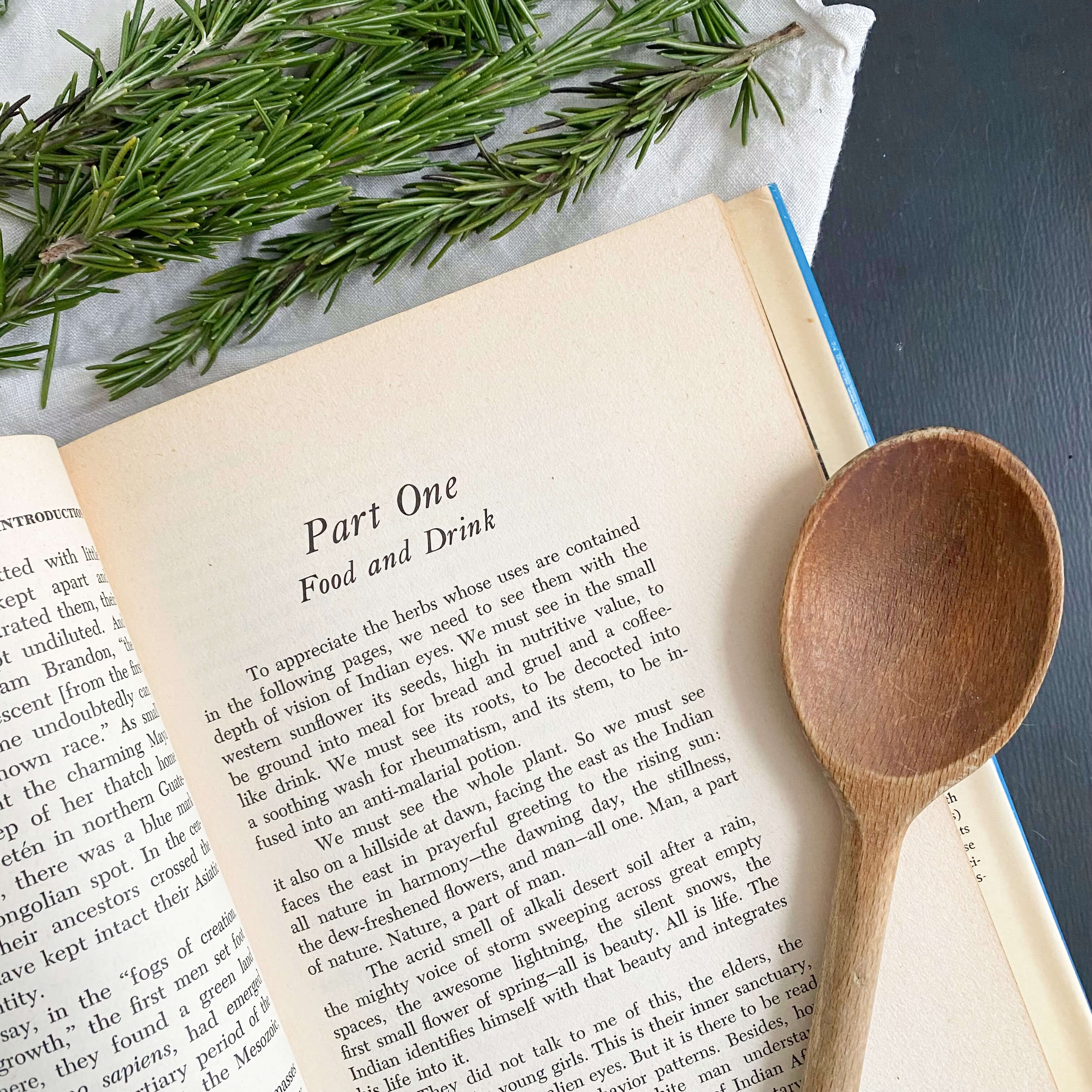


A Treasury of American Indian Herbs by Virginia Scully - 1972 Edition
This book offers humbly and gratefully, some of the cumulative herbal knowledge of the world's oldest race, knowledge that was acquired in unbroken quest over twenty or forty thousand years. Virginia Scully, 1970
{HISTORY}
It's always amazing the kind of information one can find in a vintage book about herbs. History, folklore, gardening tips, medicinal remedies, cooking suggestions, cultivation info, harvesting timetables... the wondrous herb family is wonderful in so many ways.
In 1972, American writer Virginia McCormick Scully (1898-1979) published A Treasury of American Indian Herbs, combining thousands of years of botanical knowledge into one fascinating book. A long-time curiosity project, she put years of research into this book gathered from sources around the country. Attributing much of her knowledge to the native tribes of the Rocky Mountain region, she also interviewed indigenous people around the U.S., as well as experts from the Bureau of Ethnology at the Smithsonian, the Bureau of Indian Affairs, and the Department of Agriculture.
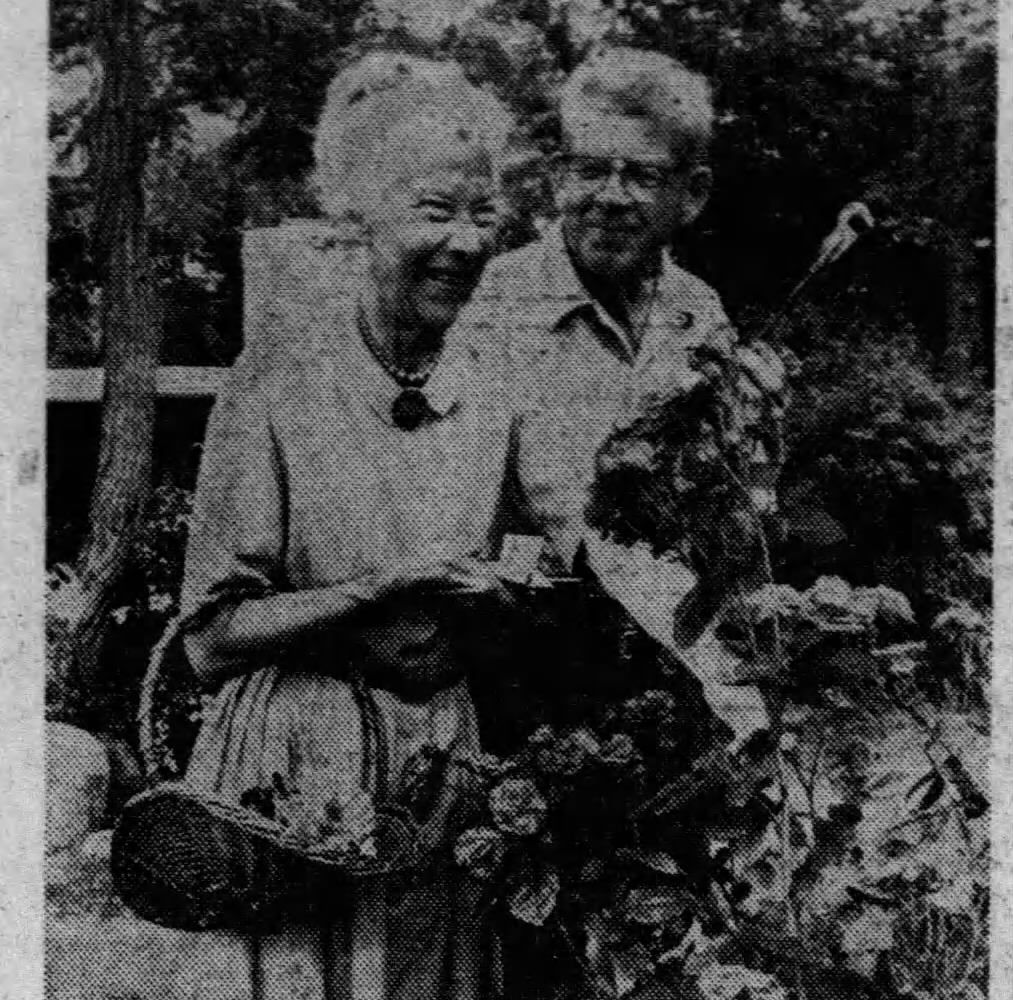
Growing up in the Midwest, Virginia always loved writing. It was a passion that would bloom into a career that would take her east to New York and to France. She shared her journalism career alongside her husband, Michael Scully, a fellow writer and intelligence officer for the US Navy. Both Michael and Virginia's careers took them around the world on writng assignments. While Michael worked for various newspapers, the New Yorker magazine, and Reader's Digest, Virginai freelanced, wrote novels and together they co-wrote a travel book to Mexico while living in South America.
When Virginia purchased a ranch in Wyoming, her interest in native plants, natural remedies and their place in history took permanent hold. The ranch, surrounded by wildflowers and mountain meadows, was part of the direct route traveled by pioneers on the Oregon Trail. As she learned more about the local flora and the history of the state, her focus centered around the resourcefulness of local indigenous tribes and their botanical expertise in utilizing the natural landscape. After years of detailed research, her field of study formed the basis of this well-received book A Treasury of American Indian Herbs published in 1970.
Fascinating on all fronts, Virginia explores a wide range of plants native to the Rocky Mountain region that were utilized for centuries by indigenous people, medicine men and wagon masters all of whom ultimately helped newcomers survive, settle and succeed in the American West. Broken down into two main sections, she begins with edible plants and how they were consumed (fresh, dried, crushed, etc). Here, readers will find information on a wind variety of plants... Absinthe, Camas, Gooseberry, Wild Geraniums, Orogenia, Primrose, Sumac, Sunflower, Yampa and Yucca to highlight a few.
In the second section, Virginia highlights the role of native plants in healing ailments and illnesses. Everything from the common head cold to influenza, skin irritations, fevers, digestion issues, pain management, and wound care are covered plus other situations that affect childbirth, temperament, aging and overall health and vitality.
Interesting to read cover to cover like a book, or digested at random, this is an incredible resource for any one interested in natural medicine, herbalism, native gardening, and history. It's amazing to think about how symbiotic our relationship to the natural landscape can be if we understood all of its power and potential. Thanks to this book, we can start to understand what benefits are growing right in our own backyards.
Although Virginia mainly focused on Rocky Mountain natives, many of the plants listed in this book can be found around the U.S., if not in the wild than in cultivated gardens. This makes the information found here applicable for anyone interested in cooking or gardening with herbs and native plants regardless of agricultural zone.
{SPECIAL FEATURES}
- Published in 1970 - unstated first edition
- Includes original dust jacket
- 306 pages including detailed index but not including the introduction
{CONDITION}
In lovely vintage condition, this book is clean and bright throughout. There is light tanning to the edging of the pages and some light foxing on the front and back end papers. The dust jacket is entirely complete in one piece with not rips or tears. A previous gift inscription is written in pencil on the front endpaper. The spine is tight, and all pages are intact.
{SIZE}
Measures 9.25" inches (length) x 6.25" inches (width) and weighs 1.5 lbs.
Original: $16.00
-65%$16.00
$5.60Product Information
Product Information
Shipping & Returns
Shipping & Returns
Description
This book offers humbly and gratefully, some of the cumulative herbal knowledge of the world's oldest race, knowledge that was acquired in unbroken quest over twenty or forty thousand years. Virginia Scully, 1970
{HISTORY}
It's always amazing the kind of information one can find in a vintage book about herbs. History, folklore, gardening tips, medicinal remedies, cooking suggestions, cultivation info, harvesting timetables... the wondrous herb family is wonderful in so many ways.
In 1972, American writer Virginia McCormick Scully (1898-1979) published A Treasury of American Indian Herbs, combining thousands of years of botanical knowledge into one fascinating book. A long-time curiosity project, she put years of research into this book gathered from sources around the country. Attributing much of her knowledge to the native tribes of the Rocky Mountain region, she also interviewed indigenous people around the U.S., as well as experts from the Bureau of Ethnology at the Smithsonian, the Bureau of Indian Affairs, and the Department of Agriculture.
Growing up in the Midwest, Virginia always loved writing. It was a passion that would bloom into a career that would take her east to New York and to France. She shared her journalism career alongside her husband, Michael Scully, a fellow writer and intelligence officer for the US Navy. Both Michael and Virginia's careers took them around the world on writng assignments. While Michael worked for various newspapers, the New Yorker magazine, and Reader's Digest, Virginai freelanced, wrote novels and together they co-wrote a travel book to Mexico while living in South America.
When Virginia purchased a ranch in Wyoming, her interest in native plants, natural remedies and their place in history took permanent hold. The ranch, surrounded by wildflowers and mountain meadows, was part of the direct route traveled by pioneers on the Oregon Trail. As she learned more about the local flora and the history of the state, her focus centered around the resourcefulness of local indigenous tribes and their botanical expertise in utilizing the natural landscape. After years of detailed research, her field of study formed the basis of this well-received book A Treasury of American Indian Herbs published in 1970.
Fascinating on all fronts, Virginia explores a wide range of plants native to the Rocky Mountain region that were utilized for centuries by indigenous people, medicine men and wagon masters all of whom ultimately helped newcomers survive, settle and succeed in the American West. Broken down into two main sections, she begins with edible plants and how they were consumed (fresh, dried, crushed, etc). Here, readers will find information on a wind variety of plants... Absinthe, Camas, Gooseberry, Wild Geraniums, Orogenia, Primrose, Sumac, Sunflower, Yampa and Yucca to highlight a few.
In the second section, Virginia highlights the role of native plants in healing ailments and illnesses. Everything from the common head cold to influenza, skin irritations, fevers, digestion issues, pain management, and wound care are covered plus other situations that affect childbirth, temperament, aging and overall health and vitality.
Interesting to read cover to cover like a book, or digested at random, this is an incredible resource for any one interested in natural medicine, herbalism, native gardening, and history. It's amazing to think about how symbiotic our relationship to the natural landscape can be if we understood all of its power and potential. Thanks to this book, we can start to understand what benefits are growing right in our own backyards.
Although Virginia mainly focused on Rocky Mountain natives, many of the plants listed in this book can be found around the U.S., if not in the wild than in cultivated gardens. This makes the information found here applicable for anyone interested in cooking or gardening with herbs and native plants regardless of agricultural zone.
{SPECIAL FEATURES}
- Published in 1970 - unstated first edition
- Includes original dust jacket
- 306 pages including detailed index but not including the introduction
{CONDITION}
In lovely vintage condition, this book is clean and bright throughout. There is light tanning to the edging of the pages and some light foxing on the front and back end papers. The dust jacket is entirely complete in one piece with not rips or tears. A previous gift inscription is written in pencil on the front endpaper. The spine is tight, and all pages are intact.
{SIZE}
Measures 9.25" inches (length) x 6.25" inches (width) and weighs 1.5 lbs.